
Food-Grade Warehouse Certifications: What Actually Matters

Food-grade warehouse certifications get used loosely in this industry.
They shouldn’t.
Food-grade warehouse certifications are supposed to define how an operation runs — not just how it markets itself.
When you store food, beverage, organic product, or medical supplies, you are protecting brand integrity, regulatory compliance, and the safety of the supply chain itself. Certifications matter — but only if the daily work matches the documentation and independent audits verify the results.
What “Food-Grade” Actually Means
A food-grade warehouse is defined by how it operates.
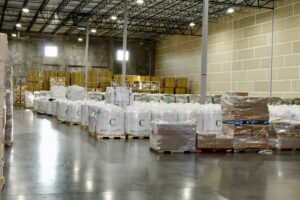
Our teams follow documented sanitation programs and maintain pest control systems year-round. They inspect every inbound load, enforce product segregation, and track freight by lot from receipt through outbound shipment. Cleaning logs stay current. Training records stay current. Procedures match what happens on the floor.
The system holds whether an auditor is present or not.
That consistency is the standard.
The Certifications That Matter
The right certifications don’t decorate a website. They shape how a warehouse runs.
Our HACCP program requires formal risk assessment inside the building. Our teams identify where biological, chemical, or physical hazards could occur within the actual flow of freight and establish control points before product moves downstream. They monitor those controls and correct deviations immediately.
GDP standards govern sanitation and handling discipline. FDA registration keeps the operation inspection-ready.
Both terminals maintain organic certification under USDA National Organic Program (NOP) standards. That certification requires documented segregation, traceability, and verified handling procedures.
Certifications define the framework. The daily work fills it in.
Independent Audits
Independent third-party auditors review our facilities multiple times each year.
They test whether the framework holds.
Auditors examine sanitation systems, structural conditions, pest control documentation, lot tracking accuracy, training records, and recall procedures. When they identify deficiencies, they require corrective action — and they verify that the corrections are implemented.
Audit discipline keeps compliance from drifting.
TSA and Bonded Capabilities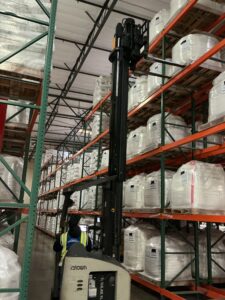
Food and beverage freight often intersects with air freight and international supply chains.
All employees at each terminal maintain TSA certification. Our teams handle secure air cargo under TSA-cleared procedures. Both facilities operate with customs bonded capabilities, allowing us to receive and store imported goods under customs control until clearance and duty resolution occur.
Security, compliance, and traceability operate inside one system.
Why It Matters
Failures in regulated freight escalate quickly. A small breakdown in documentation or handling can turn into a rejected load, a failed inspection, or a claim that follows product downstream.
Those consequences are not theoretical. They guide schedules, margins, and brand reputation.
Prevention requires structure, and structure requires daily discipline. Our teams operate inside defined procedures, maintain documentation that matches the work on the floor, and correct deviations before they compound. Because we own the facilities and employ the teams inside them, processes remain internal and traceability does not fragment across third parties.
When accountability is required, the records and the operation align.
Let’s Put It to Work
If your freight requires certified handling, audit-ready documentation, and disciplined execution, let’s talk.
We’ll walk you through our facilities and show you how standards are followed in real time.
Portland terminal: (503) 528-9705
St. Louis terminal: (636) 536-9553
sales@bridgetowntrucking.com