
What are flatbed trucks used for? They handle legal, heavy, and awkward loads that do not fit cleanly in a normal trailer. When freight keeps fighting you at the dock or at the job site, flatbed is usually the next tool to reach for.
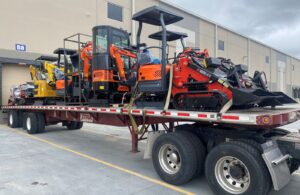
That might look like a pallet that will not clear the door, a customer yard with no dock, or product that keeps getting banged up in dry vans. At that point, the question is not “Can we force it to work?” It is “Should this be on a flatbed instead?”
The Bridgetown answer lives in a clear lane: legal, standard-dimension flatbed freight. If a load needs pilot cars and special permits, it belongs with a heavy-haul specialist. If it is legal but hard on your docks and your customers, that is where Bridgetown fits.
Bridgetown runs legal flatbed equipment out of both Portland, Oregon and St. Louis Missouri, so you have asset-based flatbed capacity on either end of key Pacific Northwest and Midwest lanes.
The flatbed market is hot
Right now, flatbed is one of the firmer spots in the truckload market. Capacity is tightening as construction and industrial freight stay busy, so carriers that run flatbed are becoming more selective about the freight they take.
If you treat flatbed as an afterthought, something you scramble for at the last minute, you feel that squeeze first. Building a plan around an asset-based partner gives you more control when the market heats up.
What is a flatbed truck
A flatbed truck is a tractor pulling an open, flat trailer with no sides and no roof. The load sits on the deck and the driver secures it with chains, straps, and other gear instead of relying on an enclosed box.
Because of that open design, a flatbed changes how freight moves:
-
Teams can load from the side or from above with forklifts or cranes.
-
Legal-dimension loads that are tall, long, or odd-shaped can ride without fighting tight clearances inside a van.
-
Drivers can serve locations with no dock, rather than hunting for a door that does not exist.
Flatbed is not automatically “oversized.” Most flatbed freight is standard, legal freight that just does not belong in an enclosed trailer.
Common flatbed uses (and problems they fix)
Instead of memorizing cargo types, it helps to think in terms of the problems operations and sales are trying to fix.
Building and construction materials
Examples: lumber packs, engineered wood, steel beams, trusses, wall panels, roofing, glass units.
-
Problem: long, heavy, awkward product that crews struggle to maneuver through dock doors and tight trailer interiors without damage or wasted time.
-
Flatbed fix: easier loading from the side, more room for safe overhang within legal limits, and direct delivery to job sites, not just warehouses.
Machinery and equipment
Examples: industrial machines, skid-mounted systems, generators, farm and construction equipment.
-
Problem: non-standard shapes and tricky centers of gravity that make these loads miserable in a van and hard to secure cleanly.
-
Flatbed fix: securement tailored to the equipment, an open deck for cranes or specialized loading, and less risk of scraping and crushing against walls and ceilings.
Steel, pipe, and metal products
Examples: plate, bar, tube, pipe, fabricated assemblies.
-
Problem: dense weight in small footprints, long pieces that create clearance problems, and a real risk of shifting if teams improvise inside an enclosed trailer.
-
Flatbed fix: better weight distribution, direct chaining and strapping to the deck, and more freedom to position material safely.
Large components and modules
Examples: tanks, pre-built building components, large frames, big industrial “one-piece” items.
-
Problem: product that technically fits inside a van on paper but causes damage, rework, or service failures because clearances are too tight in real life.
-
Flatbed fix: no ceiling or wall constraints, side or crane loading, and less chance of damaging expensive components just trying to load and unload them.
Yard, plant, and job-site deliveries
Examples: anything going to locations without standard docks, such as construction sites, yards, outdoor projects, and many plants.
-
Problem: trying to serve non-dock locations with dock-only equipment, which leads to creative but inefficient workarounds and delays.
-
Flatbed fix: the trailer becomes a flexible platform for forklifts, cranes, and other site equipment to work from, so the delivery matches how the site actually operates.
If you keep seeing damage, extra touches, or delivery headaches for the same products, that pattern usually hints that those loads belong on a flatbed instead.
Flatbed vs dry van: where each belongs
Dry vans work best when freight stays inside a standard profile:
-
Freight fits cleanly through a dock door and onto standard pallets.
-
Product moves between dock-equipped facilities and into racking.
-
Loads need full weather protection inside an enclosed trailer.
Flatbeds make more sense when freight starts pushing those limits:
-
Loads push height, length, or shape limits in a van even though they still fall within legal size.
-
Teams must load or unload by crane or from the side.
-
Deliveries go to locations where docks are not available or are a poor fit for the product.
-
Product keeps getting damaged, crushed, or hung up when you force it into a standard dry van.
The goal is not to switch everything to flatbed. The goal is to put the right freight on the right equipment so operations runs smoother and customers see fewer issues.
Flatbed in Portland and St. Louis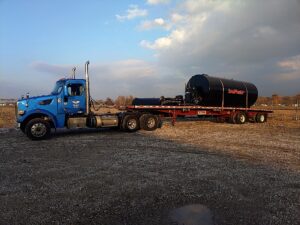
Portland and St. Louis both rely on flatbed trucking, but for slightly different reasons. Portland mixes construction, manufacturing, and port-related freight. St. Louis ties together Midwest plants, yards, and projects across multiple states. In both markets, legal flatbed loads keep moving only when the carrier understands the freight and the terrain.
In Portland, common legal flatbed loads include:
-
Structural steel and building components heading to job sites.
-
Pallet racking and material-handling equipment going into warehouses and plants.
-
Industrial equipment, skids, and large assemblies moving between local facilities.
Because Bridgetown also operates warehousing in Portland, you can stage, consolidate, or break down freight before and after flatbed moves. That reduces last-minute scrambling at job sites and keeps more control over sensitive product.
In St. Louis, flatbed work supports:
-
Steel, coil, and fabricated metal products.
-
Building materials for commercial and infrastructure projects.
-
Industrial equipment and large components for plants and yards.
From the St. Louis facility, Bridgetown runs legal flatbed freight across the greater Midwest, supporting shippers who need reliable capacity without crossing into specialized heavy-haul.
Why asset-based flatbed matters
Flatbed has less margin for error, so the carrier’s model matters.
An asset-based flatbed carrier:
-
Owns and maintains its trailers and securement gear instead of relying on whatever happens to show up.
-
Employs drivers who do flatbed work regularly and know how to handle heavy, awkward freight.
-
Matches specific equipment and driver experience to specific loads instead of treating every move as interchangeable.
Over time, the same team learns your products, job sites, and constraints. That makes it easier to design repeatable plans instead of treating every load like a one-off.
Bridgetown focuses on legal flatbed freight, not specialized heavy-haul. The aim is to be the reliable option for standard-dimension flatbed loads that are hard on vans and hard on your operations if you do not handle them properly.
When to ask “should this be on a flatbed?”
If you are seeing any of this, it is time to ask a different question:
-
Are we forcing this product into a dry van just because that is what we have always done?
-
Would a legal flatbed solve the damage, loading, or delivery problems we keep seeing?
-
Do we have an asset-based partner who can run this lane consistently in a tightening flatbed market?
That is where a focused, legal-flatbed carrier with warehousing helps: taking the everyday weird loads off your plate without crossing into true heavy-haul.
Need a better flatbed and warehousing partner in Portland or St. Louis?
Bridgetown runs certified food‑grade warehousing and asset‑based trucking out of Portland, Oregon and St. Louis, Missouri.
If you are tired of fighting with the wrong equipment or unreliable carriers, let’s talk about a better option. Call Portland at 503‑528‑9705 or St. Louis at 636‑536‑9553; or email sales@bridgetowntrucking.com to start the conversation.