
Food-Grade Warehousing for When You Need It to Just Work
If you manage inventory for a food manufacturer, distributor, or broker, you do not have time to become an expert on every warehouse you touch. You need your product stored correctly, orders shipped on time, and QA and regulators staying out of your way.
That is the job of a food-grade warehouse.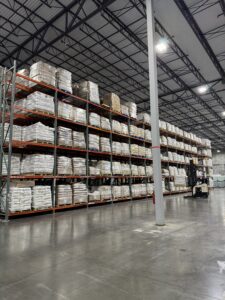
Bridgetown Trucking operates ambient food-grade warehousing in Portland, Oregon and St. Louis, Missouri around that simple idea: keep products safe, keep inspectors satisfied, and keep freight moving. Compliance and documentation are handled so you can focus on service levels, customer commitments, and growth.
Before getting into the details, look at the profile at a glance.
At a Glance: Bridgetown Food-Grade Warehousing
- Two ambient food-grade terminals: Portland, OR and St. Louis, MO
- 357,000 sq. ft. of warehouse space across both locations
- Temperature range: 45–84°F in designated food storage areas
- FDA-registered, HACCP-certified, operated under GMP
- USDA Organic via Oregon Department of Agriculture (for eligible products)
- Customs Bonded / CFS for imported food products
- TSA-cleared staff; TSA certification is a condition of employment
- WMS with lot-level tracking and customer visibility
- 5%+ inventory and order accuracy
- Food & beverage logistics support: integrated warehousing and transportation for finished goods and ingredients
- Asset-based trucking for local and regional delivery in the Pacific Northwest and Midwest
If this profile fits your needs, the rest of this page explains how Bridgetown runs its food-grade warehouses day to day.
Talk to Bridgetown About Food-Grade Warehousing
Or see our Food Grade Logistics services page.
What Food-Grade Warehousing Actually Requires
Food warehousing is not standard warehousing with extra paperwork. Requirements touch how the building is set up, how the team works, what gets documented, and what happens when something goes wrong.
A true food-grade warehouse must:
- Maintain current FDA registration, including accurate information about types of food products stored and major changes in operations.
- Clearly separate food storage areas from non-food areas, with signage and physical layout that prevent mix-ups.
- Use non-absorbent, cleanable materials wherever food products may contact surfaces.
- Run and document routine cleaning and sanitation schedules to keep dust, debris, and residue under control.
- Maintain an active, professionally managed pest control program with records available for audits.
- Track all food products received, stored, and shipped with enough detail to support recalls and customer investigations.
- Comply with state-level food storage licensing and inspections on top of federal rules.
The Portland terminal operates within Oregon Department of Agriculture guidelines, including monthly pest-control treatments from a certified contractor and continuous monitoring between visits. The St. Louis terminal follows a similar discipline under Missouri requirements.
The result is straightforward: inspections do not turn into emergencies, regulators get the records they ask for, and your inventory keeps moving.
Material Handling That Protects Product and Flow
Performance in a food warehouse is not just about where pallets sit on racks. It depends on how freight is handled every time it moves.
Bridgetown’s food-grade operation builds material handling around:
- Disciplined receiving: teams check loads at the dock for visible damage, contamination risks, and correct labeling before pallets enter storage zones.
- Standardized pallet handling: operators follow defined procedures for lifts, stacking, and putaway to avoid punctures, crushing, and broken packaging that can become food-safety issues.
- Thoughtful pick paths and staging: pick sequences, staging areas, and dock assignments keep food in the right temperature zones and out of non-food areas.
- Training for food products, not just “freight”: forklift drivers and warehouse staff learn how handling food ingredients and finished goods differs from general commodities.
For an operations manager, disciplined material handling shows up as fewer damages, fewer surprises at the dock, and faster turns when trucks need to be loaded. For QA, it shows up as fewer incidents tied to how product was touched inside the four walls.
The Role of a PCQI: Compliance Built into Daily Work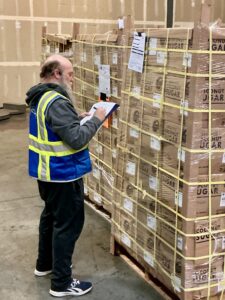
A Preventive Controls Qualified Individual (PCQI) is a defined role under current food regulations, not a marketing term.
At Bridgetown, the PCQI:
- Develops and maintains Standard Operating Procedures (SOPs) for receiving, storage, and distribution.
- Trains warehouse staff on cleanliness, sanitation, pest control, personal hygiene, and cross-contamination prevention.
- Oversees how those procedures are followed day to day and updates them when regulations or products change.
- Makes sure documentation stays complete and ready if the FDA or another agency wants to see it.
This keeps food safety from depending on any single shift lead or undocumented know-how. A named person owns the program, and a defined structure sits behind how the building runs.
When you evaluate any food warehouse partner, ask who their PCQI is and what they do week to week. If the answer is vague, the program probably is as well.
Lot Control and Inventory Visibility: When It Matters Most
A Warehouse Management System (WMS) is standard in this business. Lot control is what separates a generic WMS from a food-grade operation.
Lot control allows Bridgetown to:
- Track every pallet by SKU, lot number, quantity, and storage location.
- See where specific lots sit in real time—on the floor, staged, or already shipped.
- Generate reports that tie lots to inbound receipts and outbound shipments.
When a quality issue or a potential recall hits, lot control makes it possible to isolate only the affected lots instead of pulling everything “just in case.” It shortens response time and reduces how much product you have to touch.
Bridgetown’s WMS tracks locations, quantities, SKUs, and lot numbers. You can see your inventory data 24/7 in two ways:
- Direct login to the Warehouse Management System.
- When Bridgetown also handles your transportation, shipments are tracked through Samsara, our transportation management platform, so warehouse and trucking data stay in sync.
Monthly inventory reports are standard. You always know what you have, where it is, and which lot it came from.
What Bridgetown Stores: Ambient Food and Ingredients
Bridgetown’s food-grade facilities support ambient dry storage. In designated food storage areas, the temperature range stays between 45 and 84°F, appropriate for shelf-stable products such as:
- Canned and packaged foods
- Grains, flours, pasta, rice, oats
- Oils, fats, shortening
- Sugars and sweeteners
- Dried fruits, nuts, and snack foods
- Baking mixes and other dry ingredients
- Bottled beverages: water, soda, juice, sports drinks
- Cereals and instant hot cereal
- Dried and smoked meats
- Pet food and bulk ingredients
- Sauces and condiments in sealed packaging
Bridgetown does not offer refrigerated or frozen storage. If your products require temperatures below the ambient range, this is not the right fit, and you will hear that up front. Bridgetown focuses on running a clean, tightly controlled ambient food-grade operation instead of trying to handle every type of product.
If your products require allergen controls or segregation—for example, nuts or other major allergens—the team reviews those requirements during onboarding and designs storage layouts and processes to keep them separated and documented.

Storage Duration: Short-Term, Long-Term, and Everything in Between
Some food products move through the warehouse in days. Others sit for months as buffer stock or to match production cycles.
Bridgetown’s racking and layout support both:
- Short-term storage for just-in-time flows, seasonal items, and promotional inventory that needs quick turns and predictable staging.
- Long-term storage for shelf-stable goods where you need volume and flexibility to handle shifts in demand.
The operation uses a mix of 4-tier and 5-tier pallet racking configurations to maximize density while maintaining access and airflow. The same food-grade standards apply whether pallets stay in the building for a week or over a year.
Integrated Warehousing and Trucking: Food & Beverage Logistics Under One Roof
For many food and beverage shippers, warehousing and trucking are two halves of the same logistics problem. You need the warehouse and the carrier to work as one system.
Bridgetown is an asset-based carrier. The trucks that serve the warehouses are owned and operated under the same roof.
That matters when:
- Delivery windows change and you need to adjust quickly.
- You are coordinating inbound from ports or rail and outbound to customers across a region.
- You would rather not manage separate contracts, systems, and points of contact for the warehouse and the carrier.
Food and beverage logistics at Bridgetown combines food-grade warehousing with asset-based transportation, so finished goods and ingredients move through one coordinated schedule instead of two disconnected vendors. Finished product and inbound ingredients run on the same playbook, not separate calendars.
You can work with Bridgetown for warehousing only, transportation only, or both. The efficiencies are most obvious when one team handles the whole picture, which is why many shippers treat Bridgetown as their primary food and beverage logistics partner.
From the food-grade facilities, Bridgetown provides:
- Local and regional delivery throughout Oregon, Washington, and neighboring states from Portland
- Local and regional delivery in Missouri, Illinois, and surrounding states from St. Louis
- Full Truckload (FTL) and Less-Than-Truckload (LTL) options
- Drayage from Portland Terminal 6 and St. Louis rail yards
- Cross-docking and order fulfillment
- Final-mile delivery where needed
Certifications and Audit Readiness
Food companies and their customers expect more than “we run a clean building.” They expect proof.
Both Bridgetown terminals carry the core certification stack relevant to ambient food storage:
- FDA-registered food storage facilities
- HACCP: Hazard Analysis and Critical Control Points
- GMP: Good Manufacturing Practices
- USDA Organic via Oregon Department of Agriculture (for eligible products)
- Customs Bonded / Container Freight Station (CFS) for imported food products
- TSA: employees maintain TSA certification as a condition of employment
Third-party auditors review the program annually to maintain HACCP certification, and the operation runs on the assumption that an FDA inspector can walk in at any time.
Order and inventory accuracy runs at 99.5 percent or better. That level of accuracy matters when you measure service levels, fill rates, and on-time performance with your own customers.
What to Ask Any Food-grade Warehouse Partner
Whether you choose Bridgetown or another provider, a short list of questions will tell you most of what you need to know:
- Is the facility currently FDA-registered for the types of products you store?
- Is there a PCQI on staff, and what is that person actually responsible for?
- Does the WMS support lot-level tracking and recall management?
- What does the pest control program look like, and how is it documented?
- What is the facility’s audit history—third-party and regulatory?
- Does the operator provide transportation, or will you manage a separate carrier relationship?
- What is the documented order and inventory accuracy rate?
- How are material handling practices defined and enforced across shifts?
- Does the warehouse allow prospective partners to tour the facility?
If you ask these questions and the answers are weak, that provider is not ready to handle your food business. If you want direct answers to each one, talk to Bridgetown.
Portland and St. Louis: Two Terminals, One Standard
Bridgetown’s food-grade sites support both coastal and central distribution:
- Portland, Oregon: near Terminal 6 and Portland International Airport, serving manufacturers and distributors across the Pacific Northwest and linking to marine, air, and highway connections for imports and regional distribution.
- Louis, Missouri: in the Hazelwood corridor with access to major rail lines and interstate routes that run through the center of the country.
Both facilities operate under the same compliance framework, certification stack, material-handling discipline, and operating standards. Your pallets are handled the same way in Missouri as they are in Oregon.
Combined, these food-grade warehouses provide roughly 357,000 sq. ft. of space to stage, store, and move ambient products.
Ready to Talk About Food-Grade Warehouse Space?
If you are actively looking for food-grade warehouse space in Portland or St. Louis—or you are not satisfied with your current provider—you do not need a long sales pitch. You need straightforward answers to a short list of questions.
Bridgetown can walk you through:
- Whether your product mix fits the ambient profile
- How quickly your SKUs can be onboarded and lot control set up
- What capacity is available and how it matches your volume profile
- How warehousing and transportation can be integrated if you want a single operator
Portland: 503-528-9705
St. Louis: 636-536-9553
Email: sales@bridgetowntrucking.com
We are Bridgetown Trucking.
Freight Solutions–From Dock to Road.